
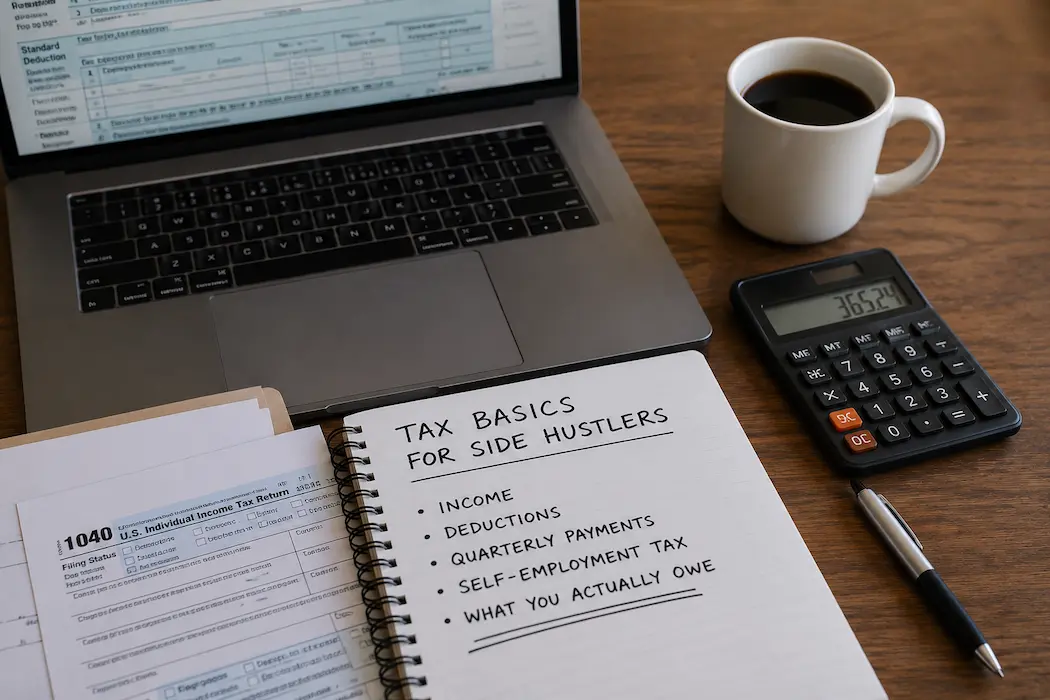

Starting a side hustle can be exciting. Whether you sell handmade products, provide freelance services, drive for delivery apps, create online content, or earn money from a small online business, extra income can help you reach personal goals faster. However, many beginners discover that earning additional money also creates new responsibilities, especially when tax season arrives.
A common mistake among new side hustlers is assuming that taxes only apply to traditional jobs with regular paychecks. In reality, income earned outside a normal employer relationship may still need to be reported. The rules can feel confusing because side hustle income often does not come with automatic tax withholding, leaving you responsible for understanding what you owe.
This guide explains the basics of side hustle taxes in simple terms. You will learn how taxable income works, when you may need to pay taxes, which expenses might reduce your taxable income, how to keep records, and the mistakes that often cause problems. Understanding these basics can help you manage your side income with confidence and avoid unpleasant surprises later.
What Counts as Side Hustle Income?
Side hustle income is money you earn outside of your main employment or primary source of income. It can come from many different activities, and the tax rules usually depend more on how the money is earned rather than what you call the activity.
For example, someone selling digital designs online, repairing computers for neighbors, tutoring students after work, renting out equipment, or providing consulting services may all have side income. Even small amounts of money can become important when they happen regularly or represent profit after expenses. Many people misunderstand side hustle income because they think only large businesses need to worry about taxes. In reality, a person earning a few hundred dollars from a weekend project may still need to understand reporting requirements.
Examples of Common Side Hustle Income
| Side Hustle Activity | Possible Income Type |
|---|---|
| Freelance writing or design | Service income |
| Online store or handmade products | Business income |
| Online courses or digital products | Product or royalty income |
| Delivery or driving services | Independent contractor income |
| Photography or event services | Professional service income |
One important point is that income is generally based on what you actually earn, not just what appears in your bank account. For example, if you receive payments through an online platform but spend money on supplies, software, or equipment, those expenses may affect your taxable profit depending on your situation.
Tip: Keep records from the beginning. Tracking income and expenses becomes much easier when you do not wait until tax season.
How Side Hustle Taxes Differ From Regular Employment
Employees usually have taxes automatically removed from their paychecks. Their employer calculates withholding amounts and sends them to the government on their behalf. This process makes taxes feel simple because employees often only review their documents at the end of the year.
Side hustlers usually have a different experience. When you work independently, clients or customers may pay you the full amount without removing taxes. This means you receive more money upfront, but you are responsible for setting aside enough to cover future tax payments. This difference is one of the biggest reasons new side hustlers feel surprised during tax season. They see the total amount they earned and forget that some of it belongs toward taxes.
| Traditional Employee | Side Hustler |
|---|---|
| Employer usually withholds taxes | Usually responsible for managing tax payments |
| Receives regular paycheck | Income may change month to month |
| Limited business expenses | May have deductible business costs |
| Employer handles payroll reporting | Must maintain personal records |
The good news is that side hustlers also have opportunities employees may not have. Running an independent activity often means you can track legitimate business expenses that reduce your taxable profit. The key is understanding which expenses qualify and keeping proper documentation.
Do You Actually Have to Pay Taxes on Side Hustle Money?
Whether you owe taxes depends on several factors, including how much you earn, your total income, your location, your expenses, and the type of work you perform. There is no universal answer that applies to every side hustler. A common misunderstanding is that small amounts of income automatically do not matter. While certain reporting rules may depend on income thresholds and specific circumstances, it is still important to track all money earned from your side activity.
For example, imagine someone earns $2,500 from freelance projects during the year. They also spend $500 on necessary software and equipment. Their taxable business profit may be different from their total payments received. Without proper records, they may not know their actual financial position.
Questions to Ask Yourself
- How much money did my side hustle generate?
- Did I spend money directly related to earning that income?
- Was this activity regular or occasional?
- Do I receive income from multiple platforms or clients?
- Do I understand the reporting rules where I live?
The safest approach is not ignoring small amounts. Building good habits early makes future growth much easier. A side hustle that earns a small amount today may become a larger income stream later.
Warning: Waiting until tax deadlines to organize years of income records can create unnecessary stress and increase the chance of mistakes.
Understanding Self-Employment Tax
Many side hustlers hear the term “self-employment tax” and become confused. In simple terms, self-employment tax generally covers certain contributions that employees and employers normally share through payroll taxes.
When you work as an employee, part of these contributions may be deducted from your paycheck, while your employer pays another portion. When you work independently, you may be responsible for handling both sides of these contributions. This does not mean every dollar earned from a side hustle is automatically taxed the same way. Tax rules depend on your specific situation, including your profit, business structure, and applicable laws.
Why Understanding This Matters
A beginner may look at their side hustle income and assume all earnings are available for spending. However, setting aside money for taxes helps prevent cash flow problems later.
For example, someone who earns extra income throughout the year but spends everything may struggle when payment deadlines arrive. A simple habit of saving part of each payment can make tax obligations much easier to handle.
| Good Habit | Why It Helps |
|---|---|
| Save a percentage of earnings | Creates money for future tax payments |
| Track every payment | Makes reporting more accurate |
| Keep receipts | Supports expense records |
| Review finances monthly | Prevents surprises |
How to Track Side Hustle Income Correctly
Good tax management starts with organization. Many tax problems happen because people do not know exactly how much they earned or where their money came from. You do not need expensive accounting software to create a basic tracking system. A simple spreadsheet can be enough for many beginners. The important thing is consistency.
Information Worth Tracking
- Date you received payment
- Customer or platform name
- Amount received
- Payment method
- Related expenses
- Notes about the transaction
Separating personal and side hustle finances can also make tracking easier. Some people create a separate bank account or dedicated payment method for their side activity. This creates a clearer picture of business income and expenses.
Expert Tip: Review your income records every month instead of trying to rebuild everything at the end of the year.
Common Tax Deductions Side Hustlers Should Know
One of the biggest benefits of running a side hustle is that certain business-related expenses may reduce your taxable profit. However, many beginners make the mistake of thinking every purchase connected to their lifestyle is a business expense. Tax deductions usually need to be connected to earning income and must meet applicable tax rules.
Understanding deductions does not mean trying to claim everything. It means learning how to recognize legitimate costs that support your work. Keeping accurate records is just as important as knowing what expenses may qualify.
Examples of Common Side Hustle Expenses
| Expense Type | Example | Why It May Matter |
|---|---|---|
| Technology | Laptop, software subscriptions, online tools | May support work activities |
| Supplies | Materials, packaging, office supplies | Used to create products or services |
| Marketing | Website costs, advertising, promotional materials | Helps attract customers |
| Professional services | Accounting or legal assistance | Supports business operations |
| Education | Industry-related courses or resources | May improve business skills |
For example, a freelance graphic designer may use design software, a computer, internet access, and online portfolio tools. A person selling handmade products may purchase materials, packaging, and shipping supplies. These costs are different from unrelated personal purchases.
A common mistake is mixing personal and business expenses together. If you buy a laptop that is used for both personal entertainment and side work, you may need to determine the business portion rather than assuming the entire cost relates to your side hustle.
Common Tax Mistakes Beginners Make
Most side hustle tax problems are not caused by complicated rules. They usually happen because beginners do not create simple systems early enough. A few small mistakes repeated throughout the year can create unnecessary confusion.
- Spending All Side Hustle Income
- Ignoring Record Keeping
- Mixing Personal and Business Money
- Assuming Online Platforms Handle Everything
| Problem | Better Approach |
|---|---|
| Keeping random receipts | Organize them by month and category |
| Guessing income totals | Track every payment received |
| Saving nothing for taxes | Create a tax savings habit |
| Ignoring small income sources | Record all earnings consistently |
Managing Estimated Tax Payments
Traditional employees often have taxes removed from each paycheck. Side hustlers may need to handle payments themselves during the year instead of waiting until the end.
Estimated tax payments are designed to help people pay taxes gradually based on expected income. The exact requirements depend on factors such as location, income level, and individual circumstances. The purpose of estimated payments is not to punish independent workers. They simply help spread tax responsibilities throughout the year instead of creating one large payment later.
A Simple Planning Method
A beginner-friendly approach is to review your side hustle income regularly. Estimate your profit, consider your possible tax responsibilities, and keep money available for future payments.
- Track your total income.
- Subtract eligible business expenses.
- Review your estimated profit.
- Set aside money consistently.
- Adjust your plan if your income changes.
Income changes are normal for side hustlers. Someone may earn very little during one month and significantly more during another. Regular reviews help you adapt instead of being surprised.
Creating a Simple Tax System for Your Side Hustle
A good tax system does not need to be complicated. The goal is to create habits that make your financial information easy to understand. Many successful side hustlers focus on consistency rather than complicated tools.
Monthly Tax Routine
| Task | Recommended Frequency |
|---|---|
| Record income | Whenever payment is received |
| Save receipts | Immediately after purchase |
| Review expenses | Monthly |
| Check tax savings | Monthly |
| Review business progress | Quarterly |
A separate folder for digital receipts, invoices, and payment records can make a big difference. Many people lose valuable information because they store financial documents in random locations.
Your system should fit your lifestyle. A person earning occasional freelance income may need only a spreadsheet. Someone running a growing online business may eventually need professional accounting tools.
Basic Organization Checklist
- Create a place for receipts.
- Track income sources.
- Separate personal and business transactions when possible.
- Review financial records regularly.
- Keep important documents for the required period.
Long-Term Tax Planning Tips for Growing Side Hustles
A side hustle often begins as a small experiment but can grow into a meaningful source of income. As your earnings increase, your approach to taxes may also need to become more organized. The biggest advantage comes from building good habits early. Someone who tracks income, saves records, and understands basic tax concepts will usually find future growth easier to manage.
Think Beyond Tax Season
Taxes are not only a yearly event. They are connected to your overall financial system. Understanding your income, expenses, and profitability can help you make better decisions about pricing, saving, and investing in your side hustle. For example, a freelancer who notices that software costs are increasing may decide whether those tools are creating enough value. A small business owner may review product costs before expanding inventory.
When Professional Help May Be Useful
Many beginners can handle basic recordkeeping themselves. However, professional guidance may become useful when situations become more complicated, such as having multiple income streams, employees, significant business expenses, or major changes in financial circumstances. A tax professional can help explain rules that apply to your specific situation. The important thing is choosing help when it adds value, rather than waiting until a problem appears.
Conclusion
Managing taxes is one of the responsibilities that come with earning money through a side hustle. While the rules may seem complicated at first, the basic principles are simple: understand your income, track your expenses, keep good records, and plan ahead. The biggest mistake many beginners make is ignoring taxes until the last moment. A small amount of organization throughout the year can make tax time much easier and help you understand how successful your side hustle really is.
Your side hustle does not need to be a large business before you take financial organization seriously. Building strong habits early creates a foundation that supports future growth. By learning the basics now, you can focus more energy on improving your work and less time worrying about unexpected problems.
FAQs
1. Should I create a separate bank account for my side hustle?
A separate account is not always required, but it can make financial tracking much easier. It helps you clearly see income, expenses, and business activity. This organization can save time when reviewing your finances and preparing tax information.
2. How much money should I save for taxes?
There is no single percentage that works for everyone because tax situations vary. Your income level, location, deductions, and other financial details all affect what you may owe. The important habit is setting aside money regularly instead of assuming your full side hustle income is available to spend.
3. Do online platforms automatically handle my taxes?
Online platforms may provide payment records or tax documents, but they usually do not remove your responsibility to understand your overall tax situation. You should keep your own records and review your total income from all sources rather than relying only on one platform.
4. What happens if I forget to track expenses?
Missing expense records can make it harder to understand your true profit and may cause you to overlook costs that could matter for your tax situation. Creating a habit of saving receipts and recording purchases throughout the year is much easier than trying to remember everything later.
5. When should I start thinking about taxes for my side hustle?
The best time is when you start earning money. Waiting until tax deadlines creates unnecessary pressure. Early organization, even with a simple spreadsheet, can help you understand your income and prepare for future growth.
References
- Internal Revenue Service (IRS) — Self-Employed Individuals Tax Center
- Internal Revenue Service (IRS) — Business Expenses Guide
- U.S. Small Business Administration (SBA) — Manage Your Finances
- Consumer Financial Protection Bureau (CFPB) — Managing Money and Financial Planning Resources
- Tax Foundation — Independent Contractor and Small Business Tax Information

Ethan Walker is a personal finance writer who focuses on helping beginners understand money simply and practically. He writes about budgeting, saving money, financial literacy, and side hustles with the goal of making financial education easier and more approachable. His content is designed to help readers build better financial habits and make smarter everyday money decisions.