
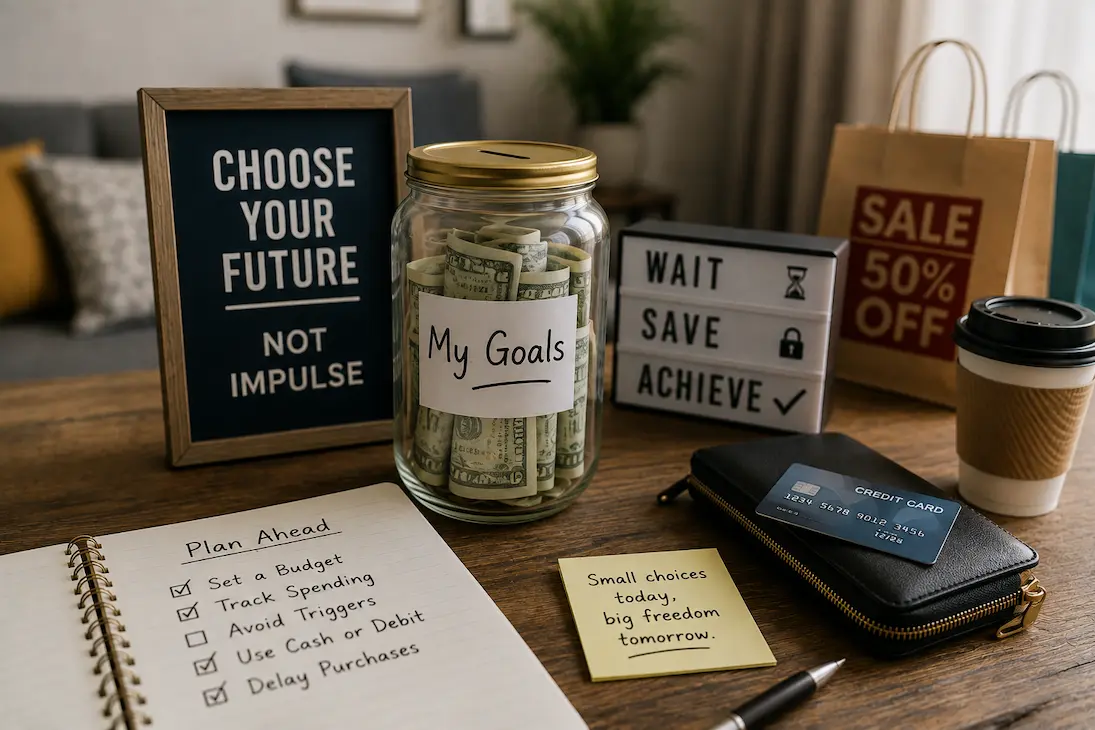

It’s often easier to save money when you put it somewhere you won’t see it every day. For many, it’s harder to keep their funds safe from the everyday purchases that seem like a good idea at the time. A meal ordered because the day got busy, a sale item that looks too enticing to pass up, another online purchase added to the cart, or an unexpected weekend cost can all slowly drain money that was meant for a specific financial goal.
The problem isn’t always a lack of discipline. Everyday spending is meant to be simple, clear, and convenient. The goal for your funds, however, is usually much further away. You get a benefit right away when you buy something, but you have to value a benefit in the future that you can’t see or enjoy yet when you save. That difference can make spending money in the short term feel better, even if you want to save cash.
To protect your funds, you need to do more than just tell yourself to spend less. It’s better to make it harder to casually tap your savings, spend a little more carefully, and keep enough of a gap between the money you need today and the money you’ll need tomorrow. The goal is not to get rid of all enjoyable purchases. This is done so that normal spending doesn’t steal money that is already being used for important things.
Set a Clear Goal for Your Savings
It’s easier to keep your money safe when you know why you’re doing it. A balance that just says “savings” can make you feel like you have money to spend, especially when an appealing buy comes up. A balance tied to a clear goal makes a mental boundary stronger because you can see what would happen after you spend the money.
Your goal could be a fund for an emergency, a big purchase you’ve been planning, an upcoming cost, a trip, or something else important to you financially. It’s more important to make the purpose real than to be clear about what it is. You could say, “I have €1,000 saved for an emergency fund,” instead of “I have €1,000 saved. ” That small change can make taking out the money feel more like a choice with a result than a normal move. That doesn’t mean you should never save money. It might be necessary in cases of real emergencies and important cash matters. The goal is to tell the difference between using savings for what they were meant for and constantly taking money out because regular spending has gone higher than planned.
Put a Number and Reason Behind the Goal
A savings goal becomes easier to protect when you know how much you are trying to accumulate and why the amount matters. If you are saving €2,000 for a planned purchase, for example, every €100 removed from that balance has a visible effect on your progress. Without a defined target, it can be harder to recognize the opportunity cost of spending.
Write down the goal, target amount, and general timeframe somewhere you will see it during your regular financial review. You do not need to turn the goal into a motivational slogan or constantly monitor it. The purpose is simply to make the future use of the money more visible when an everyday temptation appears.
Keep Savings Separate From Everyday Spending
One of the simplest ways to protect savings is to create physical or digital separation between money intended for saving and money intended for regular spending. If all your money is in one account, the total balance can make it look like you have more available spending money than you actually do.
For example, suppose your account contains €2,500, and €1,000 of that amount is intended for savings. If you see €2,500 every time you open your banking app, a €150 purchase may feel affordable. If the €1,000 is held separately, your everyday balance more accurately represents the money available for normal spending.
The separation does not need to be complicated. Depending on your banking setup, you may be able to use a dedicated savings account, separate savings spaces, or another appropriate account structure. The important principle is to make the money you have already committed to saving less visible during routine spending decisions.
Make Casual Transfers Less Convenient
Convenience is useful when you are saving, but it can work against you when you are tempted to spend. If moving money from savings to your everyday account requires only a few taps, an impulsive purchase can quickly become a savings withdrawal.
Adding a small amount of friction can create useful breathing room. This might mean keeping savings in a separate account rather than the account connected to everyday purchases, removing the savings account from your immediate spending view where your banking system allows it, or simply deciding that transfers from savings require a deliberate review rather than being part of normal spending.
The goal is not to make legitimate access difficult. You should still be able to reach money when you genuinely need it. The goal is to make casual access less automatic.
Create a Spending Amount You Can Use Freely
Trying to protect every euro can sometimes make saving unnecessarily restrictive. If your entire budget feels controlled, you may eventually become tired of constantly saying no to yourself. A better approach can be to deliberately leave some money available for normal enjoyment.
This amount can cover restaurants, hobbies, entertainment, small purchases, or other discretionary spending that fits within your financial situation. Once that amount has been planned, spending it does not need to feel like a failure. The important boundary is that discretionary spending comes from money assigned to that purpose rather than from savings.
For example, if your monthly plan leaves €200 for flexible personal spending, you can decide how to use that money without repeatedly questioning whether every small purchase is damaging your savings. If the €200 runs out, the answer is not automatically to withdraw another €100 from savings. You can either wait until the next period or reconsider your spending priorities.
This creates a useful separation between “I am allowed to spend this” and “I am allowed to spend everything I have.”
Add Friction to Tempting Purchases
Many everyday purchases happen because buying something is incredibly easy. A saved payment method, one-click checkout, shopping notifications, promotional emails, and constant exposure to products can reduce the time between wanting something and purchasing it. Adding a little friction can interrupt that process.
You might remove saved payment information from frequently tempting websites, unsubscribe from promotional messages, turn off retail notifications, or avoid browsing shopping apps when you are bored. These changes do not require you to stop shopping altogether. They simply create a gap between the impulse and the transaction.
That gap matters because the desire to buy something can change after a few hours or a day. If you still want the item after the waiting period and it fits your spending plan, you can make the purchase with more confidence. If the desire disappears, your savings have effectively been protected without requiring a complicated budgeting exercise.
Use a Waiting Rule for Non-Essential Purchases
A waiting rule is one of the simplest ways to reduce unnecessary withdrawals from your spending money. Instead of deciding immediately, give yourself a defined period before purchasing something that was not planned.
The waiting period can be short for inexpensive purchases and longer for more expensive ones. For example, you might wait until the next day before making an unplanned purchase while allowing yourself several days to consider a more expensive item. The point is not that waiting automatically makes something unnecessary. It gives you time to distinguish a genuine preference from a temporary desire.
During the waiting period, ask yourself whether you would still want the item if it were not discounted, whether you already own something that performs the same function, and whether buying it would interfere with a financial goal. These questions can make the real trade-off visible without turning the decision into a moral judgment about spending.
Do Not Let Discounts Decide What You Buy
Discounts can make spending feel like saving because the advertised price is lower than the original price. But if you did not actually need or want the item before seeing the discount, spending less than the original price is still spending money.
This is particularly important when promotions create urgency. Limited-time offers, countdowns, bundle deals, free-shipping thresholds, and percentage discounts can encourage people to make purchases they were not planning to make.
Before responding to a promotion, ask a simple question:
“Would I buy this at the normal price if I had not seen the discount?”
If the answer is no, the discount may be creating the purchase rather than helping you save money. A genuine discount on something you already planned to purchase can be useful. A discount that convinces you to buy something you did not need simply changes the amount you spend; it does not create a financial saving.
Watch for Small Repeated Spending
Protecting savings does not require obsessing over every €2 purchase. However, repeated small expenses deserve attention when they become a pattern. A daily snack, frequent delivery fee, regular coffee purchase, or small digital purchase may have little impact individually. The problem arises when several recurring habits combine to create a significant monthly expense. Because each transaction feels minor, it can be difficult to connect them with a savings goal.
Rather than banning every small purchase, review your repeated spending periodically. Look for expenses that happen often enough to influence your monthly cash flow. If you find one, decide whether you want to keep it, reduce its frequency, or replace it with a lower-cost alternative. The objective is awareness, not perfection. A €4 purchase you genuinely enjoy may be worth keeping. Four different €4 habits that you barely notice may deserve a closer look.
Separate “Want It” From “Need It Now”
Some purchases are genuine wants, and there is nothing inherently wrong with that. The useful distinction is whether the purchase needs to happen immediately. A person may genuinely want new headphones, a piece of furniture, clothing, or a kitchen appliance. That does not mean the purchase has to come directly from savings today. If the item is not urgent, you can create a separate purchase goal and save toward it over time.
This approach protects existing savings while still allowing room for future purchases. It also changes the emotional experience of buying. Instead of feeling that you had to resist something you wanted, you have created a path toward purchasing it without interfering with another financial priority. That is often more sustainable than relying on permanent self-denial.
Keep Your Savings Out of the Shopping Mental Loop
The more frequently you see your savings while making everyday decisions, the easier it can become to think of the money as available. This is especially true when your banking app displays multiple account balances together and you mentally add them up before making a purchase.
You can reduce this effect by thinking about your everyday spending balance separately from your savings balance. When deciding whether you can afford a normal discretionary purchase, look first at the money actually assigned to spending.
This does not mean ignoring your overall financial position. It means respecting the purpose of each pool of money. A savings balance is not automatically an extension of your spending budget simply because you can technically access it.
Protect Savings From “I Deserve It” Spending
Emotional spending can be particularly difficult to recognize because the purchase may feel justified. After a stressful week, difficult project, disappointing event, or exhausting period, spending money can become a form of immediate reward. The problem is that rewards are sometimes inappropriate. The problem occurs when emotional relief repeatedly comes from spending money that was intended for another purpose.
Create alternative ways to reward yourself that do not automatically require a major purchase. You might spend time on a hobby, meet a friend, take a walk, cook something enjoyable, watch a favorite film, or deliberately use a small amount of your already-planned discretionary budget.
When you do want to spend, decide consciously. Ask whether you are buying something because you genuinely want it or because spending feels like a quick solution to an emotion. That distinction can help protect savings without pretending emotions have no influence on financial decisions.
Make Savings Transfers Happen Before Temptation Appears
If you wait until the end of the month to save whatever remains, everyday spending gets the first chance to consume the money. A planned transfer can reverse that order.
For example, if your budget allows you to save €150 per month, arranging for that amount to move into savings according to a schedule that fits your cash flow can prevent it from becoming part of your everyday spending balance.
However, the transfer still needs to be realistic. Automating an amount that repeatedly leaves you short of money can create the opposite problem. The goal is not to make savings untouchable at any cost. It is to allocate money deliberately before casual spending decisions can absorb it. Once the transfer is established, the remaining spending money becomes a clearer representation of what you can actually use.
Review Your Savings Before Making Large Purchases
For larger discretionary purchases, it can be useful to pause and look at the bigger financial picture rather than focusing only on whether the purchase fits your current account balance.
Suppose you have €1,500 in savings and are considering spending €700 on something you had not planned. Technically, you may be able to make the purchase. But the more useful questions are whether the €700 has another purpose, how much savings would remain afterward, and whether the purchase would delay another important goal.
This is not an argument against large purchases. It is a reminder that affordability has more than one dimension. A purchase can fit within your available cash and still conflict with a goal that matters more to you. For significant spending decisions, compare the purchase with the opportunity cost rather than looking only at the price tag.
Build a “Do Not Touch” Boundary for Important Savings
Some savings should be treated differently from ordinary short-term money. If you are building an emergency reserve or saving for an important upcoming obligation, giving that money a stronger boundary can prevent casual withdrawals.
You might mentally classify the account as money reserved for specific circumstances rather than general spending. The exact boundary depends on the purpose of the savings. Emergency savings, for example, are intended for unexpected necessary expenses rather than routine purchases.
The benefit of a clear boundary is that it removes some of the debate from everyday shopping decisions. You do not have to repeatedly ask whether you can afford a purchase from the emergency fund. The answer is generally already established by the purpose of that money.
What to Do After You Spend From Savings
Even a strong system will occasionally need to be adjusted. You may make an unnecessary purchase, encounter an unexpected expense, or temporarily use money that was previously reserved for a goal. The important thing is not to treat one withdrawal as proof that the entire savings system has failed.
Instead, identify why the money was used. If it was a genuine need, the withdrawal may have served exactly the purpose for which the savings existed. If it was discretionary spending, look at what made the purchase possible. Perhaps your spending allowance was too restrictive, your savings account was too easy to access, or a particular temptation repeatedly caused problems.
Use the experience as information. Rebuild the savings according to your circumstances and make one practical adjustment rather than responding with an extreme spending restriction.
A Simple Savings-Protection System
A practical system does not need dozens of rules. The following structure can provide several layers of protection without making everyday finances unnecessarily complicated:
- Keep everyday spending separate from savings. This makes your available spending balance easier to understand.
- Give important savings a clear purpose. Know what the money is reserved for before temptation appears.
- Automate a realistic contribution. Move an amount that fits your actual cash flow rather than an idealized budget.
- Maintain discretionary spending money. Allow yourself some planned flexibility so that saving does not feel like a permanent restriction.
- Use waiting periods for unplanned purchases. Give yourself time to decide before spending money on non-essential items.
- Add friction where temptation is strongest. Remove shopping notifications, saved payment details, or other conveniences that encourage automatic purchases.
- Review recurring patterns. Look for small expenses that repeatedly compete with your savings.
- Revisit the system when circumstances change. Your income, expenses, priorities, and savings goals will not necessarily remain the same.
The strength of this system comes from combining several small safeguards rather than depending entirely on willpower.
Conclusion
The key to protecting your savings from the pull of everyday spending is not extreme frugality but rather establishing firm limits for your money. When savings are combined with daily expenses and are readily available and emotionally accessible for every purchase, it is much easier to use them without realizing what the decision is costing you.
Separate your savings from daily expenses, assign a distinct purpose to each significant objective, establish a reasonable budget for discretionary spending, and introduce a slight hurdle for items that often entice you. Use the waiting periods when something isn’t necessary. Watch for recurrent little expenses. Don’t let short promotions or emotions dictate actions that belong in your longer-term financial strategy.
More importantly, don’t define success by never touching your savings. Savings are a tool to help you meet your financial priorities, whether they are real needs or planned ambitions. The key to success is knowing when to use the money and when to keep it protected. When that boundary is apparent, it makes everyday spending easier to manage, and you don’t have to give up everything you enjoy.
FAQs
1. How can I stop myself wasting my savings?
First, separate your savings from the account you use for regular expenses and give those funds a purpose. Or you can add a waiting period for non-essential purchases and make the transfer from savings a conscious decision, rather than an automatic reaction to a low spending level. These adjustments lower the likelihood that a temporary temptation may trigger a withdrawal from savings.
2. Can I put my funds in a different account?
A separate account can help you keep track of money that is for savings and money that is for normal spending. The optimum setup will depend on your banking alternatives and circumstances, but separation can provide a valuable psychological and practical boundary.
3. Can I get into some of my savings?
That depends on what the savings are for. You can spend funds set aside for a specific future purchase on that item. Emergency savings are usually kept for true emergencies. The big question is whether the withdrawal is consistent with the purpose for which the money was given.
4. How long should I wait to make an impulse purchase?
There is no set waiting period. The delay can be as little as a few days for larger, discretionary purchases, although smaller, less expensive items may just require a short delay. It is giving you enough time to decide if you really want the thing and if it fits in with your budgetary priorities.
5. What happens if I keep taking money out of my savings every month?
Frequent withdrawals indicate that anything in your system may need care. Ask yourself if your daily spending budget is reasonable, if your savings goal is too ambitious, and if the account is too easily accessible. Withdrawals for actual recurrent expenses may need to be more intentionally incorporated into your normal financial strategy.

Ethan Walker is a personal finance writer who focuses on helping beginners understand money simply and practically. He writes about budgeting, saving money, financial literacy, and side hustles with the goal of making financial education easier and more approachable. His content is designed to help readers build better financial habits and make smarter everyday money decisions.