
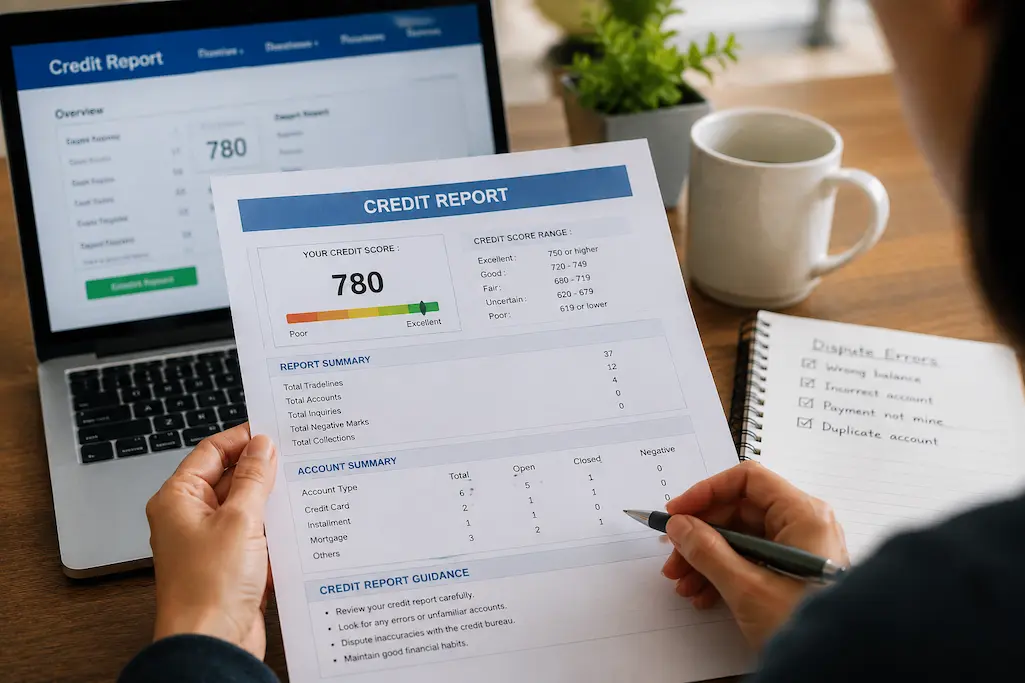

Your credit report plays a much bigger role in your financial life than many people realize. Whether you apply for a credit card, finance a car, rent an apartment, or even apply for certain jobs, someone may review your credit history. Because of that, even a small mistake on your report can create unnecessary problems. An incorrect late payment, a loan that doesn’t belong to you, or outdated information could lower your credit score and make borrowing pricier.
The good news is that reading your credit report is not as difficult as it first appears. Although the document contains many sections and financial terms, most of the information follows a simple structure once you understand what you’re looking at. More importantly, you are entitled to dispute information that is inaccurate or incomplete. Correcting errors can improve your credit profile and help lenders see a more accurate picture of your financial habits.
This guide explains every major part of a credit report in plain language. You’ll learn how to understand each section, recognize common mistakes, dispute incorrect information, and build habits that help keep your credit information accurate over time.
What Is a Credit Report?
A credit report is a detailed record of how you have managed borrowed money over time. It collects information from banks, credit card companies, loan providers, and other lenders to create a history of your financial activity. This report helps lenders decide how risky it may be to lend you money. Think of your credit report as a financial report card. Instead of showing school grades, it shows how consistently you’ve paid bills, how much debt you currently owe, and how you’ve handled credit accounts throughout the years.
Your credit report is different from your credit score. A credit report contains detailed financial information, while a credit score is simply a number calculated using information found in your report. Because the score depends on the report, mistakes in the report may also affect the score. Many people assume they only need to review their report before applying for a loan. In reality, reviewing it regularly helps detect errors, identity theft, and outdated information before they become larger problems.
Why Your Credit Report Matters
Your credit report influences many financial decisions that affect everyday life. While lenders are the most common users of credit reports, they are not the only ones who may review them. For example, banks often examine your credit history before approving personal loans, mortgages, or credit cards. Landlords may review your report before renting an apartment because they want confidence that rent payments will be made on time. Some insurance companies may also use credit-related information when determining premiums, depending on local laws.
Having an accurate report can help you qualify for better interest rates and more favorable loan terms. On the other hand, inaccurate negative information may result in higher borrowing costs or declined applications.
Monitoring your report regularly also allows you to identify suspicious activity quickly. If someone opens an account using your personal information, early detection makes resolving identity theft much easier.
| Accurate Credit Report | Incorrect Credit Report |
|---|---|
| Fair evaluation by lenders | Possible loan rejection |
| Better interest rates | Higher borrowing costs |
| Reliable financial history | Damaged credit reputation |
| Faster loan approvals | Additional paperwork and delays |
Understanding the Main Sections of a Credit Report
Although different credit reporting agencies may organize reports slightly differently, most include the same major sections. Learning what each section contains makes the entire document much easier to understand.
Personal Information
This section lists your name, previous names if applicable, current and former addresses, date of birth, and other identifying details. It is used only for identification purposes and does not affect your credit score.
Credit Accounts
This area is often the largest section of the report. It includes credit cards, mortgages, student loans, auto loans, and personal loans. Each account typically lists the lender’s name, current balance, payment history, account status, and credit limit if applicable.
Payment History
Most reports include a month-by-month record showing whether payments were made on time. This section is one of the most important because payment history is a major factor used in many credit scoring models.
Credit Inquiries
Whenever you apply for new credit, lenders may review your report. These checks are recorded as inquiries. Some inquiries affect your score temporarily, while others do not.
Public Records
Depending on local regulations and reporting practices, some reports may include certain legal financial records. Modern credit reports often contain fewer public records than they did years ago due to changing reporting standards.
Warning: Never assume every item on your credit report is correct simply because it appears official. Reporting mistakes can happen.
Checking Your Personal Information Carefully
The first section many people skip is often the easiest to verify and one of the most important. Personal information errors may seem harmless, but they can sometimes mix someone else’s financial information with yours. Begin by confirming that your full legal name is spelled correctly. Check previous names, addresses, and any listed employers if included. Small mistakes such as an incorrect address or a misspelled name are usually simple to correct, but they should still be reported.
If you notice an address where you have never lived or a variation of your name that you have never used, investigate further. While clerical mistakes happen, unfamiliar personal information could also indicate identity theft or a mixed credit file. Take your time reviewing every detail instead of rushing through the page. This simple habit can prevent larger issues later in the report.
How to Review Your Credit Accounts
After confirming your personal information, move to the section that lists your credit accounts. This area provides a complete picture of your borrowing history and deserves careful attention. Start by making sure every listed account actually is yours. Look at the lender’s name, the type of account, the date it was opened, and the current balance. If you find an account you do not recognize, do not ignore it. It could be a reporting mistake or a sign that someone has used your identity to open credit in your name.
Next, compare the reported balances with your recent account statements. Small timing differences are normal because lenders update information on different schedules, but large differences should be investigated. You should also review an account marked as open that has already been closed. Pay special attention to the payment history shown for each account. One incorrectly reported late payment may lower your credit score even if you have always paid on time. Compare reported payment dates with your records whenever possible.
| What to Review | Why It Matters |
|---|---|
| Account ownership | Confirms the account belongs to you |
| Current balance | Ensures debt amounts are accurate |
| Credit limit | Affects credit utilization calculations |
| Payment history | Strong influence on credit scores |
| Account status | Shows whether accounts are open or closed correctly |
Common Credit Report Errors You Should Watch For
Although credit reporting systems are designed to be accurate, mistakes can still happen. Financial institutions process millions of records every month, and even a small data entry error can appear on your report. While some mistakes are minor, others can affect your credit score, maincrease the cost of borrowing, or even lead to a denied loan application
The important thing is knowing what to look for. As you review your report, compare every detail with your own financial records. If something doesn’t seem right, please investigate it rather than assuming it will correct itself. Credit bureaus rely on information supplied by lenders, so errors sometimes remain until someone reports them.
- Incorrect Personal Information
- Accounts That Do Not Belong to You
- Incorrect Payment History
- Duplicate Accounts
- Outdated Information
Warning: Never ignore unfamiliar accounts or unexplained balances. Investigating them quickly can reduce the risk of long-term financial problems.
How to Dispute Errors on Your Credit Report
Finding an error can feel stressful, but correcting it is usually a straightforward process. Credit reporting agencies provide ways for consumers to dispute inaccurate information, and lenders are generally required to investigate valid claims.
Step 1: Gather Evidence
Step 2: Identify the Exact Error
Step 3: Contact the credit bureau.
Step 4: Contact the Lender
Step 5: Wait for the Investigation
| Dispute Step | Purpose |
|---|---|
| Gather documents | Provide proof that supports your claim |
| Identify the error | Help investigators review the correct information |
| Submit dispute | Officially request an investigation |
| Contact lender | Encourage faster correction if an error exists |
| Review results | Verify that corrections have been completed |
What Happens After You Submit a Dispute?
After you submit your dispute, the credit bureau reviews the information with the company that supplied it. During this process, the lender checks its records to determine whether the reported information is accurate. If your documents clearly show that an error occurred, the lender may correct its records and notify the credit bureau. Once verified, the bureau updates your credit report accordingly.
If the lender believes its information is correct, the disputed item may remain on your report. In that situation, you may have the opportunity to provide additional evidence or request another review if new information becomes available. Once the investigation is complete, take the time to review your updated report carefully, ensuring that every correction has been applied properly. Do not assume every issue has been resolved automatically.
Simple Habits That Help Keep Your Credit Report Healthy
Correcting errors is important, but preventing future problems is even better. Building a few simple habits can help keep your credit report accurate while supporting a strong financial reputation.
- Pay Bills on Time
- Review Statements Regularly
- Keep Contact Information Updated
- Limit Unnecessary Credit Applications
- Store Financial Records
How Often Should You Check Your Credit Report?
Many people review their credit report only when applying for a mortgage or personal loan, but checking it more regularly offers important benefits. Routine reviews help you identify reporting mistakes before they become larger issues and allow you to spot signs of identity theft sooner.
A good habit is to review your report at least once each year. However, you may wish to check it more frequently if you recently paid off a loan, closed an account, experienced identity theft, or noticed suspicious financial activity. You should also review your report before applying for major credit, such as a mortgage or vehicle loan. This gives you time to correct any unexpected problems before lenders evaluate your application.
| Situation | Recommended Time to Check |
|---|---|
| Routine review | At least once each year |
| Before applying for a loan | Several weeks in advance |
| After identity theft concerns | Immediately and regularly afterward |
| After paying off major debt | Verify account updates within the next reporting cycle |
Common Myths About Credit Reports
Many people avoid checking their credit report because they have heard information that simply is not true. Believing these myths can prevent you from catching mistakes or taking steps to improve your financial health. Understanding the facts helps you make better decisions and gives you more confidence when managing your credit.
Myth 1: Checking Your Own Credit Report Lowers Your Credit Score
This belief is one of the most common misunderstandings. When you request your credit report, it is considered a soft inquiry. Soft inquiries are used for personal reviews and do not affect your credit score. Only certain hard inquiries, such as applying for new credit, may have a temporary impact.
Myth 2: Every Error Will Fix Itself
Some people assume reporting mistakes will eventually disappear without any action. Unfortunately, many errors remain until they are reported and investigated. Reviewing your report regularly allows you to identify and dispute inaccurate information before it causes larger problems.
Myth 3: A High Income Means a Good Credit Report
Your income is not included in your credit report. A person with a high salary can still have a poor credit history if they frequently miss payments or carry excessive debt. Likewise, someone with a modest income can still maintain an excellent credit profile by managing credit responsibly.
Myth 4: Closing Every Credit Card Improves Your Credit
Closing old accounts is not always beneficial. In some situations, it may reduce your available credit and increase your credit utilization ratio. Before you close an account, think about how it could impact your overall credit profile.
FAQs
1. How can I obtain a copy of my credit report?
In many countries, major credit reporting agencies must provide consumers with their credit report upon request. The process may be available online, by mail, or through other official channels. Always obtain your report from trusted sources to protect your personal information and ensure you receive accurate records.
2. How long does it take to correct an error?
The exact timeline varies depending on the credit bureau, the lender, and the complexity of the dispute. Once you submit your dispute, the bureau will investigate the information with the company that reported it. Responding quickly to requests for additional documentation can help avoid unnecessary delays.
3. What should I do if I find an account that isn’t mine?
Please contact the credit reporting agency immediately and dispute the account. You should also notify the lender that reported the account and consider taking additional steps to protect yourself if identity theft is suspected. Acting quickly can limit potential financial damage.
4. Will correcting an error increase my credit score?
It can, but there is no guarantee. If the corrected information removes inaccurate negative items, such as late payments or incorrect balances, your credit profile may improve. The exact impact depends on your overall credit history and the scoring model being used.
Conclusion
Your credit report is one of the most important financial documents you have. It tells lenders how you have managed credit over time and can influence everything from loan approvals to interest rates. Fortunately, understanding your report is easier than many people expect once you know what each section means.
By reviewing your personal information, checking every account carefully, monitoring payment history, and looking for unfamiliar activity, you can identify mistakes before they become serious problems. If you find inaccurate information, gathering supporting documents and submitting a dispute allows you to have those errors corrected.
Making credit report reviews part of your regular financial routine helps protect your identity, keeps your financial records accurate, and allows you to make informed decisions with confidence. A few minutes spent reviewing your report each year can save time, money, and unnecessary stress in the future.

Ethan Walker is a personal finance writer who focuses on helping beginners understand money simply and practically. He writes about budgeting, saving money, financial literacy, and side hustles with the goal of making financial education easier and more approachable. His content is designed to help readers build better financial habits and make smarter everyday money decisions.